Most sailing itineraries treat Kornati as a single day — a box to tick between Šibenik and Zadar. You motor through, snap a photo of the cliffs, anchor at Levrnaka for lunch, and leave the next morning. That approach is fine if you are collecting ports. But if you want to actually understand why the Kornati archipelago is one of the most extraordinary landscapes in the Mediterranean, you need to stay. You need a full week. This Kornati sailing route gives you that week.
The numbers alone are staggering. Eighty-nine islands and islets scattered across 35 kilometres of open sea. Fewer than a dozen permanent inhabitants across the entire chain. The densest archipelago in the Mediterranean, yet one of the emptiest. The islands are bare limestone — stripped of soil by centuries of sheep grazing and the relentless bora wind — and they rise from water so clear you can read your anchor chain at twelve metres. George Bernard Shaw reportedly said that on the last day of creation, God wanted to crown his work, and from tears, stars, and breath he created the Kornati islands. We cannot verify the quote, but we understand the impulse. Kornati does not look like anywhere else.
This seven-day circular Kornati sailing route from Šibenik keeps you inside the archipelago for the entire week. You will enter Kornati National Park through the Murter Channel on Day 2 and spend five nights sleeping on your yacht in anchorages that feel like they exist at the edge of the world. You will walk the cliffs at Ravni Žakan, swim the turquoise shallows at Sakarun, float in the salt lake at Telašćica, and eat grilled fish at family-run konobas where the proprietor caught your dinner that morning. By Day 7, when you cruise back through the Šibenik Channel, you will know these islands in a way that most visitors — even most Croatian sailors — never do. This is the Kornati deep dive, best explored on a crewed motor yacht charter with Splendid Yachting.
| Route Code | S02 — Kornati Archipelago: The 7-Day Deep Dive |
| Start / End | D-Marin Mandalina, Šibenik |
| Duration | 7 days / 6 nights |
| Total Distance | ~90 NM |
| Difficulty | Beginner — sheltered waters, short daily passages |
| Best Months | May, June, July, August, September |
| Recommended Yacht | Motor yacht 15–25m or sailing yacht 40–50ft with tender |
| Key Highlights | Kornati NP cliffs, Telašćica salt lake, Sakarun Beach, Levrnaka Beach, Žut konobas |
| National Parks | Kornati National Park + Telašćica Nature Park (separate permits required) |
| Route Character | Circular. Almost entirely sheltered. Emphasis on immersion over mileage. |

Day by Day
Day 1 — Šibenik: Embarkation & the UNESCO Waterfront
| Passage | No sailing — embarkation day |
| Marina or Anchorage | D-Marin Mandalina, Šibenik (full-service marina, water, fuel, shore power) |
| Highlight | UNESCO Cathedral of St James, St Michael’s Fortress, old town exploration |
| Dinner | Pelegrini (Michelin-starred) or Konoba Tinel (traditional) |
Your week in the Kornati archipelago begins at D-Marin Mandalina, the modern full-service marina tucked into the western shore of Šibenik’s natural harbour. Mandalina opened in 2016 and immediately became the Dalmatian coast’s most polished marina — 399 berths, 80-tonne travel lift, full provisioning, and a waterfront promenade lined with restaurants. Your yacht is waiting at the pontoon, fuelled, provisioned, and gleaming. Board by midday, stow your luggage, and let the crew brief you on the week ahead. Then step off the yacht and into one of Croatia’s most underrated cities.
Šibenik is not Split or Dubrovnik — it does not have the international fame or the cruise-ship crowds — and that is precisely why we love starting here. The old town is intimate, winding, and built entirely from local limestone. The centrepiece is the Cathedral of St James (Katedrala sv. Jakova), a UNESCO World Heritage Site since 2000, and the largest cathedral in the world built entirely from stone without mortar or wooden supports. The 15th-century architect Juraj Dalmatinac designed a building that seems to defy physics — a barrel-vaulted roof of interlocking stone plates, a dome assembled from prefabricated ribs, and a frieze of 71 portrait heads running around the exterior apse, each one an individually carved face of a Šibenik citizen from the 1400s. Stand at the north wall and study them: merchants, priests, fishermen, a woman laughing, a man scowling. It is the most democratic public artwork of the Renaissance.
After the cathedral, climb to St Michael’s Fortress (Tvrđava sv. Mihovila), the oldest of Šibenik’s four fortresses, which sits on a promontory 70 metres above the harbour. The fortress has been beautifully restored as a concert venue, and the panoramic terrace offers a 360-degree view of the city, the Šibenik Channel, the Krka River estuary, and — in the far distance — the first grey outlines of the Kornati islands where you will spend the next five days. If the light is right, you will see why this city was strategically vital for a millennium: the channel narrows to barely 200 metres at its tightest point, making Šibenik a natural chokepoint that Venetians, Ottomans, and Habsburgs all fought to control.
Wander back down through the old town in the evening light. The streets are steep, narrow, and mercifully free of souvenir shops. Stop at Gradska Vijećnica (the old city loggia) on the main square, then work your way towards dinner. For a special first-night meal, Pelegrini is the choice — Šibenik’s Michelin-starred restaurant, set in a stone building directly beside the cathedral. Chef Rudolf Štefan works with Kornati fish, Drniš pršut, and Skradin lamb, presented with fine-dining precision but without a gram of pretension. If you prefer something more traditional, Konoba Tinel in the old town serves exceptional grilled fish, handmade pasta (šurlice), and local wines from the Primošten vineyards — try the Babić, a red varietal grown on impossibly steep terraced hillsides just down the coast.

Dinner recommendation: Pelegrini for the Michelin experience, or Konoba Tinel for unpretentious Dalmatian cooking. Either way, order the Babić wine from Primošten — you will pass those vineyards on your return journey. At Pelegrini, the Kornati fish carpaccio starter is a preview of what you will be eating all week, but prepared with a refinement you will not find at an island konoba. Note: Pelegrini’s tasting menu pricing varies seasonally; expect EUR 100–140 per person as of early 2025. Always verify current rates when booking.
Insider note: Do not rush the embarkation. Many guests treat Day 1 as a transit day — board the yacht and immediately depart. We disagree. Šibenik deserves an afternoon on foot, and you will appreciate it even more after a week on the water. The old town is best explored in the late afternoon, when the stone glows amber and the cruise-day trippers have departed. Also: stock up on any last-minute provisions here. Once you enter the Kornati archipelago, there are no supermarkets, no ATMs, and no shops of any kind.
Day 2 — Kornati National Park: Lavsa Bay & Piškera Ruins
| Passage | ~20 NM from Šibenik via Murter Channel into Kornati NP |
| Marina or Anchorage | Lavsa Bay — mooring buoys, sheltered on all sides (Kornati NP buoy field) |
| Highlight | Entering Kornati NP, Lavsa Bay snorkelling, Piškera abandoned settlement |
| Dinner | Konoba Piškera (grilled fish, simple Dalmatian fare) |
This is the day the landscape changes. You depart D-Marin Mandalina after breakfast, motor northwest through the Šibenik Channel, and round the headland past Vodice and the Murter coast. The Murter Channel is your gateway to the Kornati archipelago — a two-nautical-mile crossing between the Murter peninsula and the first outer islands. In calm conditions (which are typical from May to September), it is a simple 15-minute transit. In bora conditions (northeast wind, usually forecast well in advance), the channel can build a short, choppy sea. Your captain will have checked the forecast; if bora is blowing, you may take a slightly more sheltered route through the inner channel between Murter and Kornati. Either way, by late morning you will be inside the national park boundary, and the world will look entirely different.
The first thing you notice about Kornati is the silence. The second is the colour: grey limestone islands rising from water that shifts between cobalt blue and pale turquoise depending on depth and bottom. There are no trees on most of the islands — the landscape is bare rock, low scrub, and dry-stone walls built by generations of shepherds who grazed sheep here until the mid-20th century. The walls divide the islands into plots, running in straight lines from shore to summit like latitude lines on a globe, and they give Kornati its distinctive visual character. From the sea, the islands look like a row of crouching grey animals sleeping in the sun. The landscape is often described as lunar, but that misses the point — the moon is lifeless and grey. Kornati is grey too, but it teems with life beneath the waterline and hums with the sound of cicadas above it.
Your destination today is Lavsa Bay, one of the most beautiful and sheltered anchorages in the entire Kornati chain. Lavsa is a narrow, deep bay on the island of the same name, oriented north-south, with rocky shores rising steeply on both sides and a shallow sandy bottom at the head. The national park has installed mooring buoys here — you pick up a buoy rather than anchoring (free anchoring is prohibited inside Kornati NP to protect the seabed). Once secured, the water is your playground. The visibility here regularly exceeds 30 metres. Slip off the swim platform with a mask and snorkel and you will see sea urchins, octopus, and shoals of damselfish within arm’s reach. The rocky walls of the bay are encrusted with colourful sponges and anemones. If you have a tender, motor over to the adjacent bay and explore the underwater caves that riddle the limestone shoreline.
In the afternoon, take the tender (or, if your yacht draws less than 2m, motor carefully) to Piškera, the largest of Kornati’s abandoned fishing settlements. Piškera was once a bustling village of seasonal fishermen who came from the mainland each summer to work the rich waters. The ruins of stone houses, a small chapel, and the harbour walls still stand, slowly being reclaimed by fig trees and wild rosemary. Today, Piškera operates as a small marina (mooring buoys and a basic pier) with a single konoba that opens in summer. The konoba serves the kind of food that defines this route: whole fish grilled over charcoal, boiled potatoes, Swiss chard with olive oil, and a carafe of house wine. Nothing more, nothing less. The fish was swimming that morning.

Dinner recommendation: Konoba Piškera is the obvious choice — and in Kornati, “obvious” does not mean “tourist trap.” It means “the only restaurant within ten nautical miles.” Order whatever fish they have, grilled whole. Ask for olive oil from the mainland (they usually have Šolta or Brač oil). Pair it with the house white, which will be a Debit or Maraština from the Zadar hinterland. Finish with a rakija. Total cost: surprisingly modest.
Insider note: Arrive at Lavsa by noon if possible. In July and August, the mooring buoys fill up by mid-afternoon, and once they are taken, you will need to move to an alternative bay (Vrulje or Strižnja are the backups). In June and September, Lavsa is often yours alone. Also: your captain should have arranged the Kornati NP permit in advance (it is based on vessel length; expect EUR 50–150 per day for a 15–25m yacht). Without a valid permit, park rangers can — and do — issue fines.
Day 3 — Ravni Žakan & Levrnaka: Kornati’s Crown Jewels
| Passage | ~12 NM through the Kornati chain |
| Marina or Anchorage | Levrnaka Bay — mooring buoys, sand-bottom, sheltered (Kornati NP buoy field) |
| Highlight | Ravni Žakan cliffs & snorkelling, Levrnaka sand-bottom beach |
| Dinner | On board — your chef prepares fresh-caught fish, or Konoba Levrnaka if operating |
If Day 2 was your introduction to Kornati, Day 3 is the masterclass. Today you visit the two locations that define the archipelago — the two places that appear on every postcard, every drone video, and every “best of Croatia” list, and that still manage to exceed expectations when you see them in person. Ravni Žakan has the cliffs. Levrnaka has the beach. Between them, they represent everything that makes Kornati unique.
Depart Lavsa after a leisurely breakfast and motor south through the Kornati channel towards the archipelago’s outer edge. Within an hour, you will reach Ravni Žakan, and the landscape will shift from gentle bays to something far more dramatic. The outer (southwestern) face of the Kornati chain drops vertically into the open Adriatic — enormous limestone cliffs, 80 metres high in places, plunging straight into deep blue water. These are the famous “Kornati cliffs” (locally called “krune” — crowns), and at Ravni Žakan they reach their most spectacular. Your captain will position the yacht at a safe distance from the cliff base, and you will see the full scale: vertical rock walls, undercut by millennia of wave action, with caves and arches at the waterline. The water at the base is 30-40 metres deep and impossibly clear. This is the best snorkelling in the Kornati archipelago — strap on a mask and fins and swim along the cliff face, watching the rock wall disappear into blue infinity below you. Grouper, moray eels, and octopus inhabit the crevices. If you are a confident swimmer, explore the sea caves that penetrate the cliff base — your crew should have waterproof torches.
There is a small konoba at Ravni Žakan that operates in summer — a handful of tables on a stone terrace, family-run, serving grilled lamb and fish. If it is open and you want lunch ashore, this is one of the most memorable dining locations in Croatia: eating lamb chops while staring at 80-metre cliffs dropping into the sea. But the konoba’s opening is unpredictable (the family comes from the mainland when they choose to), so do not count on it. Have your chef prepare a backup lunch on board.
After Ravni Žakan, motor northeast to Levrnaka, home to Kornati’s most celebrated beach. Luka Levrnaka is a perfectly sheltered bay on the island’s eastern side — a crescent of fine white pebbles and sand leading into water so clear and shallow that it glows turquoise from 50 metres away. The bay is oriented to catch the morning sun and is sheltered from the afternoon maestral by low hills on either side. Pick up a mooring buoy (they fill up in high summer — arrive before 14:00) and swim ashore. The beach is small — perhaps 50 metres of shoreline — but the water is knee-deep for 30 metres out, warm as a bath by July, and the seabed is fine white sand. It is the kind of beach you associate with the Greek islands or the Caribbean, not with the rugged Croatian coast. Bring a mask: the rocks at either end of the bay are excellent for snorkelling, with posidonia meadows that shelter juvenile fish.
The contrast between Ravni Žakan and Levrnaka is what makes Day 3 extraordinary. In the space of four hours, you have gone from vertical cliffs and deep-water drama to a gentle, sun-warmed cove where you can stand waist-deep and watch schools of mullet swim between your legs. This is Kornati’s range — from savage to serene, from exposed to sheltered, from deep to shallow — and you experience the full spectrum in a single day.
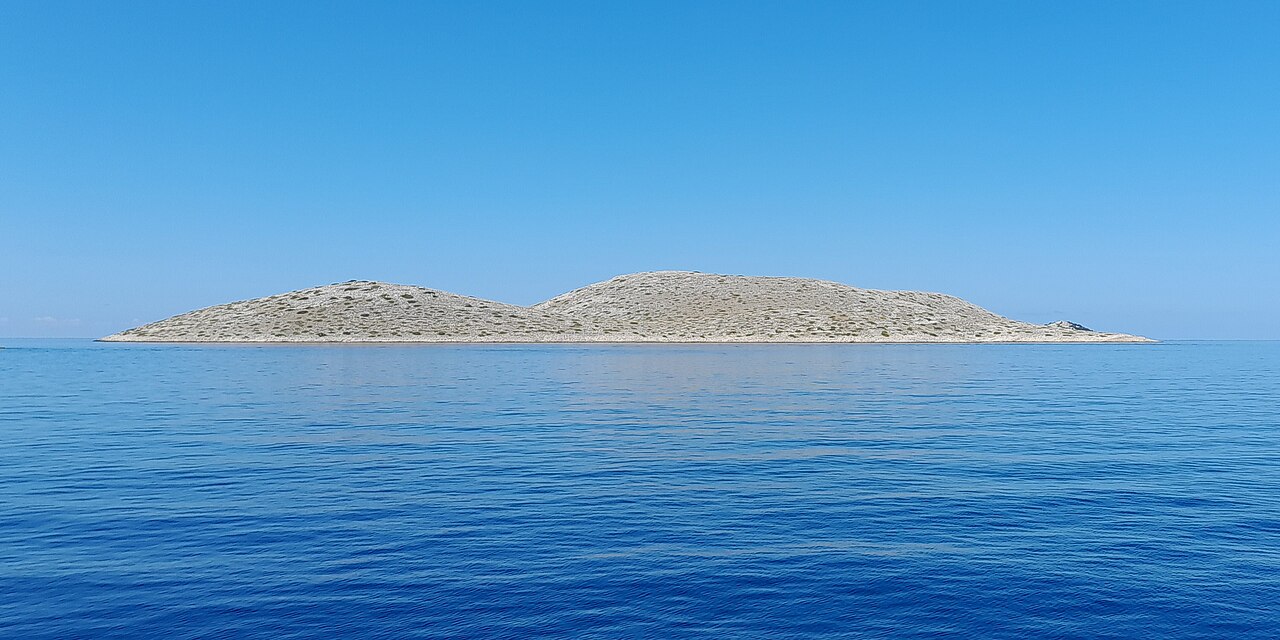

Dinner recommendation: Tonight is a yacht dinner. Your chef should have fresh fish (purchased at Piškera or brought from Šibenik), and this is the evening to eat on the aft deck as the sun sets over the Kornati cliffs. Request grilled orada (sea bream) with olive oil and lemon, a Šibenik-area Plavac Mali red wine, and fresh figs if the season is right. If Konoba Levrnaka is operating (it opens sporadically in peak summer), it is worth a visit for grilled octopus under the peka — a bell-shaped dome of hot coals that slow-roasts the octopus until it is meltingly tender.
Insider note: Ravni Žakan is best visited in the morning, when the sun illuminates the cliff face and the sea is at its calmest. By afternoon, the maestral can build a swell against the outer cliffs, making snorkelling uncomfortable. Levrnaka is best in the afternoon, when the bay catches full sun and the water is at its warmest. Plan your day in this order — cliffs first, beach second — and you will hit both at their best. One more thing: bring reef shoes. The beach at Levrnaka is mostly sand, but the entry point has some sharp rocks. And if you are visiting Lojena Beach on the nearby island (another Kornati gem accessible by tender), the approach is rocky. Lojena is worth the detour if time allows.
Day 4 — Telašćica Nature Park: Salt Lake Mir & the Cliffs of Dugi Otok
| Passage | ~15 NM north through the Kornati chain to Telašćica Bay, Dugi Otok |
| Marina or Anchorage | Telašćica Bay — mooring buoys in the inner bay (Nature Park buoy field) |
| Highlight | Salt lake Mir, 160m sea cliffs, Telašćica Bay exploration |
| Dinner | On board or Konoba Goro in Telašćica |
Today you leave Kornati National Park and enter an entirely different — but equally extraordinary — protected area. Telašćica Nature Park occupies the southern tip of Dugi Otok (literally “Long Island”), and although it borders Kornati NP, it has its own distinct character. Where Kornati is bare and austere, Telašćica is surprisingly lush — Aleppo pines, olive groves, and dense Mediterranean maquis cover the hillsides. Where Kornati’s bays are open and exposed to the outer sea, Telašćica’s bay is one of the most deeply sheltered natural harbours in the Adriatic — a 10-kilometre-long inlet that narrows to just 160 metres at its entrance, creating a fjord-like enclosure where the water is always flat calm. The difference is striking. You motor in through the narrow mouth and feel the wind drop to nothing. The water inside the bay is emerald green, not the cobalt blue of the open Kornati channels, and the hillsides are thick with vegetation. It feels like you have crossed from a desert into an oasis.
Pick up a mooring buoy in the inner bay (Telašćica has its own permit system, separate from Kornati NP — your captain arranges this) and take the tender ashore to the park’s walking trails. The main attraction is Lake Mir (“Peace Lake”), a saltwater lake separated from the sea by a narrow ridge of limestone. The lake is connected to the Adriatic through underground fissures, so it rises and falls with the tide, but the water is warmer (often 5°C warmer in summer) and saltier than the open sea. The effect is extraordinary: you float effortlessly, buoyancy increased by the high salinity, in water that feels like a warm bath. The lake bottom is covered in healing mud (local tradition says it cures skin ailments), and the shoreline is fringed with reeds and wild herbs. Bring water shoes — the approach is rocky — and swim out to the centre of the lake, where the water is deepest and the silence is absolute. This is one of the most unusual swimming experiences on the Croatian coast.
After Lake Mir, take the 20-minute walk to the Telašćica cliffs on the western edge of the nature park. These cliffs are even taller than Ravni Žakan — they rise 160 metres above the sea and plunge vertically into water 90 metres deep. The view from the cliff-top lookout is vertiginous: you stand at the edge and look straight down at the Adriatic, watching seabirds wheel below you. The cliffs face west, so they catch the afternoon and evening light beautifully. If you time it right, you will be here for sunset, when the limestone glows orange and the sea turns from blue to gold. The trail is well-marked, easy to walk, and takes you through dense pine forest before emerging at the clifftop viewpoint. It is one of the best short hikes in Dalmatia.
Return to the yacht in the evening and either dine on board or visit Konoba Goro, a family-run restaurant at the head of Telašćica Bay. Goro is famous for two things: lamb roasted under the peka (order it in advance if possible), and its position — tables are set on a stone terrace directly above the water, with views down the entire length of the bay. The food is simple, generous, and excellent. Pair it with a local red wine (they usually have a decent Plavac Mali from Pelješac) and finish with homemade rakija flavoured with herbs from the surrounding hillsides. This Kornati sailing route is best experienced on a crewed yacht charter, where your captain handles navigation and permits while you focus on the landscape.
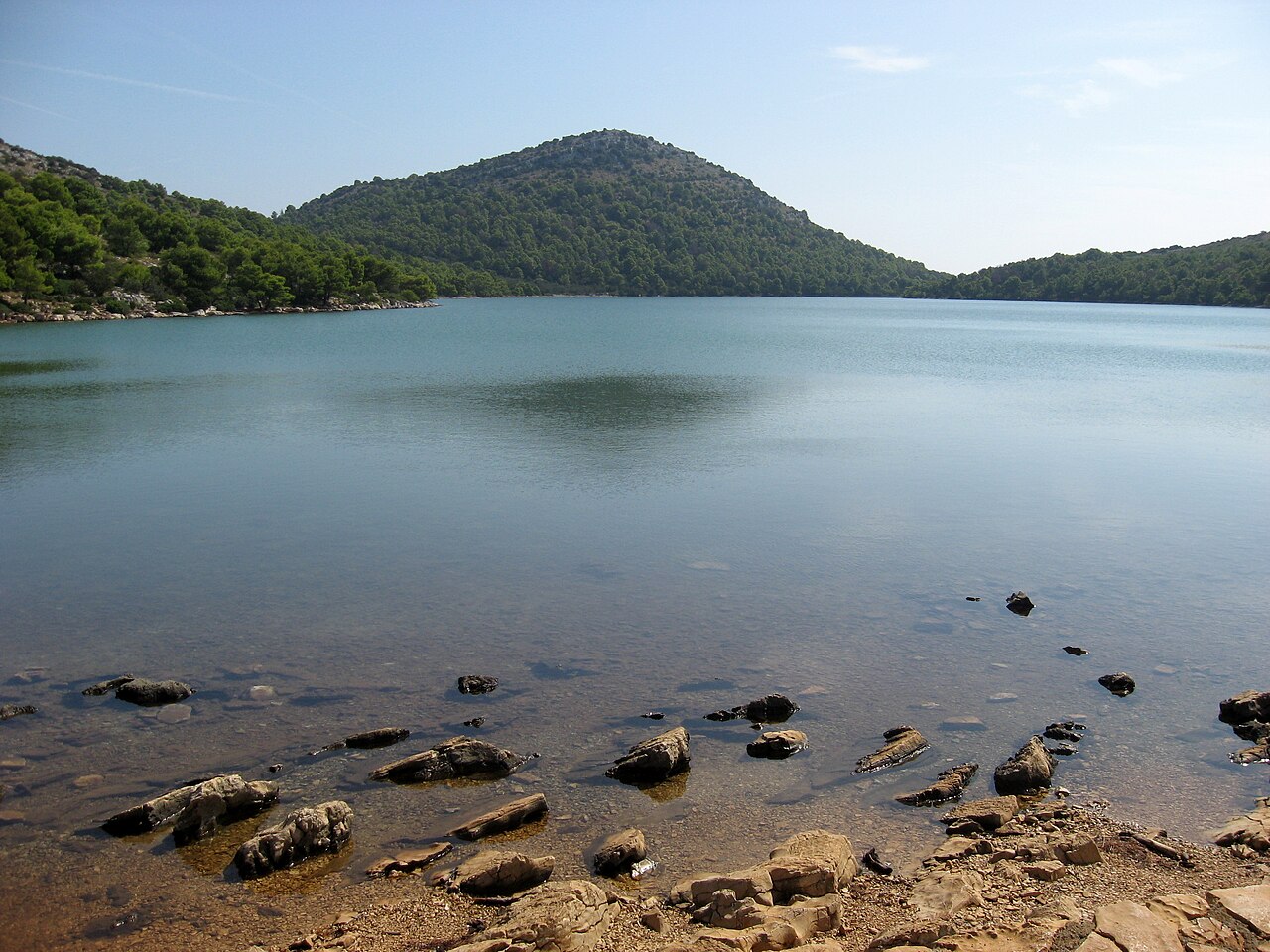
Dinner recommendation: If you are dining on board, request a seafood risotto or black cuttlefish ink pasta (crni rižot). If you go ashore, Konoba Goro is the choice — order the lamb peka if you called ahead, or grilled fish if you didn’t. The octopus salad starter is excellent: tender, dressed simply with olive oil, garlic, and parsley. Do not skip the house rakija — it is made by the owner and flavoured with sage picked from the hills behind the restaurant.
Insider note: Telašćica fills up in high summer, especially on weekends when local Croatian boats arrive from Zadar. Arrive by early afternoon to secure a mooring buoy in the inner bay. If the inner bay is full, the outer sections (towards the entrance) are less crowded but more exposed to swell. Also: the walk to the cliffs is easy but exposed — bring sunscreen, a hat, and water. There is no shade once you leave the pine forest. Finally, if you are interested in hidden beaches accessible only by boat, the coves between Telašćica and Sali on the northern end of Dugi Otok are worth exploring by tender.
Location & Map
The Kornati sailing route is a 7-day circular itinerary beginning and ending at D-Marin Mandalina in Šibenik. The route covers approximately 90 nautical miles through the Kornati National Park, Telašćica Nature Park on Dugi Otok, and the surrounding archipelago. Šibenik is located on the central Dalmatian coast, approximately 90 km north of Split and 100 km south of Zadar. The Kornati islands lie 15-20 NM offshore from the mainland.
Why Charter with Splendid Yachting?
Splendid Yachting specialises in crewed motor yacht charters along the Croatian coast, with routes designed specifically for the Kornati archipelago. All charters include a professional captain familiar with Kornati NP permit procedures, national park fees, and the best anchorages for each wind condition. Your crew handles navigation, mooring buoy reservations, and provisions, allowing you to focus entirely on experiencing the islands. Charters depart from Šibenik, Split, and Zadar, with itineraries customised to your schedule and interests. Request a quote and availability for your preferred dates.
Day-by-Day Itinerary
- Day 1: Šibenik embarkation, UNESCO old town, Cathedral of St James
- Day 2: Šibenik to Lavsa Bay via Murter Channel, Piškera ruins
- Day 3: Ravni Žakan cliffs and Levrnaka beach
- Day 4: Telašćica Nature Park, Lake Mir, Dugi Otok cliffs
- Day 5: Sakarun Beach and Dugi Otok northern coast
- Day 6: Žut island, konoba dining, and return to Kornati
- Day 7: Return to Šibenik via the inner islands, disembarkation
Route Highlights
- Kornati National Park: 89 islands, vertical cliffs, and the densest archipelago in the Mediterranean
- Ravni Žakan Cliffs: 80-metre vertical limestone walls with underwater caves and exceptional snorkelling
- Levrnaka Beach: Fine white sand and turquoise shallows in a sheltered bay
- Telašćica Nature Park: 160-metre sea cliffs, salt Lake Mir, and lush pine forests
- Sakarun Beach: One of Croatia’s most beautiful white-sand beaches on Dugi Otok
- Island Konobas: Family-run restaurants serving grilled fish caught that morning
Wind & Weather Conditions
The Kornati archipelago enjoys sheltered sailing conditions from May through September. The dominant summer wind is the maestral, a gentle northwest breeze that builds in the early afternoon (typically 10-15 knots) and dies at sunset. The maestral provides comfortable sailing temperatures and rarely creates uncomfortable seas inside the archipelago. The bora (northeast wind) is less common in summer but can blow strongly in spring and autumn — your captain will monitor forecasts and adjust the route if necessary. The Murter Channel and the outer Kornati passages can be choppy during bora conditions. Sea temperatures range from 20°C in May to 26°C in August. Air temperatures range from 24-30°C in summer. Rain is rare between June and September.
Sail This Route with a Private Crew
This Kornati sailing route is designed for crewed motor yacht charters from Splendid Yachting. All vessels include a professional captain, hostess or chef (depending on yacht size), fuel, national park permits, marina fees, and provisions. Charters start from EUR 20,000 per week for a fully crewed motor yacht accommodating up to 8 guests. Itineraries are flexible and can be adjusted based on weather, interests, and pace. Enquire now for 2025 availability.
Frequently Asked Questions: Kornati Sailing Route
What is the best time of year to sail the Kornati archipelago?
The best months for the Kornati sailing route are May, June, and September. May offers comfortable temperatures (22-26°C), fewer crowds, and lower charter rates. June has warmer water (22-24°C) and longer days. September is ideal for experienced sailors seeking solitude — the water is warmest (24-26°C), the crowds have departed, and the light is beautiful for photography. July and August are peak season with the warmest weather but also the busiest anchorages and highest prices. Avoid October through April unless you are comfortable with cooler temperatures, shorter days, and the possibility of bora winds.
Do I need special permits to sail in Kornati National Park?
Yes. Kornati National Park requires all vessels to hold a valid permit, which is priced based on vessel length and duration of stay. Permits are typically EUR 50-150 per day for a 15-25m yacht. Telašćica Nature Park requires a separate permit. If you charter with Splendid Yachting, all permits, marina fees, and national park fees are included in your charter rate. Your captain will handle all paperwork and buoy reservations. Park rangers patrol regularly and will check permits — fines for sailing without a valid permit can exceed EUR 500.
Can I anchor freely in the Kornati islands?
No. Free anchoring is prohibited inside Kornati National Park to protect the delicate seabed and posidonia meadows. All vessels must use designated mooring buoys, which are installed and maintained by the national park. Buoys are available at Lavsa, Levrnaka, Piškera, and other popular anchorages. Buoy fees are included in your national park permit. Outside the park boundaries (for example, at Žut or Telašćica), some anchorages allow free anchoring, but always check local regulations. Your captain will know the rules for each location.
Is the Kornati route suitable for beginner sailors?
Yes. This Kornati sailing route is ideal for beginners and families. The daily passages are short (10-20 NM), the waters are sheltered, and the navigation is straightforward. There are no difficult channel crossings, no strong currents, and no overnight passages. The route is almost entirely within the protected waters of the Kornati archipelago, where the sea is calm except during rare bora conditions. If you charter a crewed yacht with Splendid Yachting, your professional captain handles all navigation, mooring, and weather decisions — you simply enjoy the journey. For those considering crewed versus bareboat charters in Croatia, the Kornati route strongly favours crewed for first-time visitors.
What should I pack for a week in the Kornati islands?
Pack light, breathable clothing, reef shoes (essential for rocky beaches and Lake Mir), sun protection (hat, high-SPF sunscreen, sunglasses), and a light windbreaker for evening breezes. Bring snorkelling gear if you have your own (most charter yachts provide masks and fins). Pack a small dry bag for tender trips to shore. Kornati is remote — there are no shops, ATMs, or pharmacies once you leave Šibenik, so bring any prescription medications, toiletries, and personal items you need. Casual dress is the norm; even Pelegrini in Šibenik does not require formal attire. A good camera or smartphone is essential — the scenery is extraordinary. Finally, bring a reusable water bottle: all charter yachts have water makers or ample bottled water supplies.
More Trip Ideas
Šibenik to Hvar & Korčula: The 7-Day Island-Hopping Route
Extend your Dalmatian adventure south from Šibenik to the famous islands of Hvar and Korčula. This 7-day island-hopping route takes you from the Kornati wilderness to the vibrant nightlife of Hvar Town, the lavender fields of Brač, and the medieval walls of Korčula. Perfect for those who want a mix of remote anchorages and lively harbour towns.
Šibenik Grand Loop: The 14-Day Kornati, Vis, Hvar & Brač Route
If you have two weeks, this is the ultimate Croatian sailing route. The Šibenik Grand Loop combines the Kornati archipelago with the outer islands of Vis, the beaches of Hvar, and the historic towns of Brač. You will visit the Blue Cave, swim at Stiniva, dine in Hvar Town, and explore remote bays that see fewer than a dozen yachts each summer. This route covers the full spectrum of the Dalmatian coast.
Šibenik to Vis & Blue Cave: The 7-Day Sailing Route
Head south from Šibenik to the wild outer island of Vis, one of Croatia’s most unspoiled destinations. This 7-day route includes the famous Blue Cave on Biševo, the hidden beach at Stiniva, and the fishing villages of Komiža and Vis Town. The route is slightly more exposed than the Kornati itinerary — open-sea crossings and fewer sheltered anchorages — but the rewards are exceptional. Read the full Šibenik to Vis sailing route.
Insider Croatia — delivered weekly.
Subscribe to the Splendid Croatia newsletter for weekly itineraries, hidden anchorages, island guides, and exclusive yacht charter offers. We cover the entire Croatian coast from Istria to Dubrovnik, with a focus on routes and destinations best explored by boat. No spam, no sales pitches — just in-depth sailing knowledge and insider tips delivered every Thursday.
[Newsletter signup form here]
Location & Map
View on OpenStreetMap
